AI Basics & History05 Nov 2026
The AI Era: The Complete Series Guide
One page that lists every post in The AI Era series, grouped by theme, with a short method for checking any AI claim yourself.
By Faisal Adnan
Faisal Adnan · 05 Nov 2026
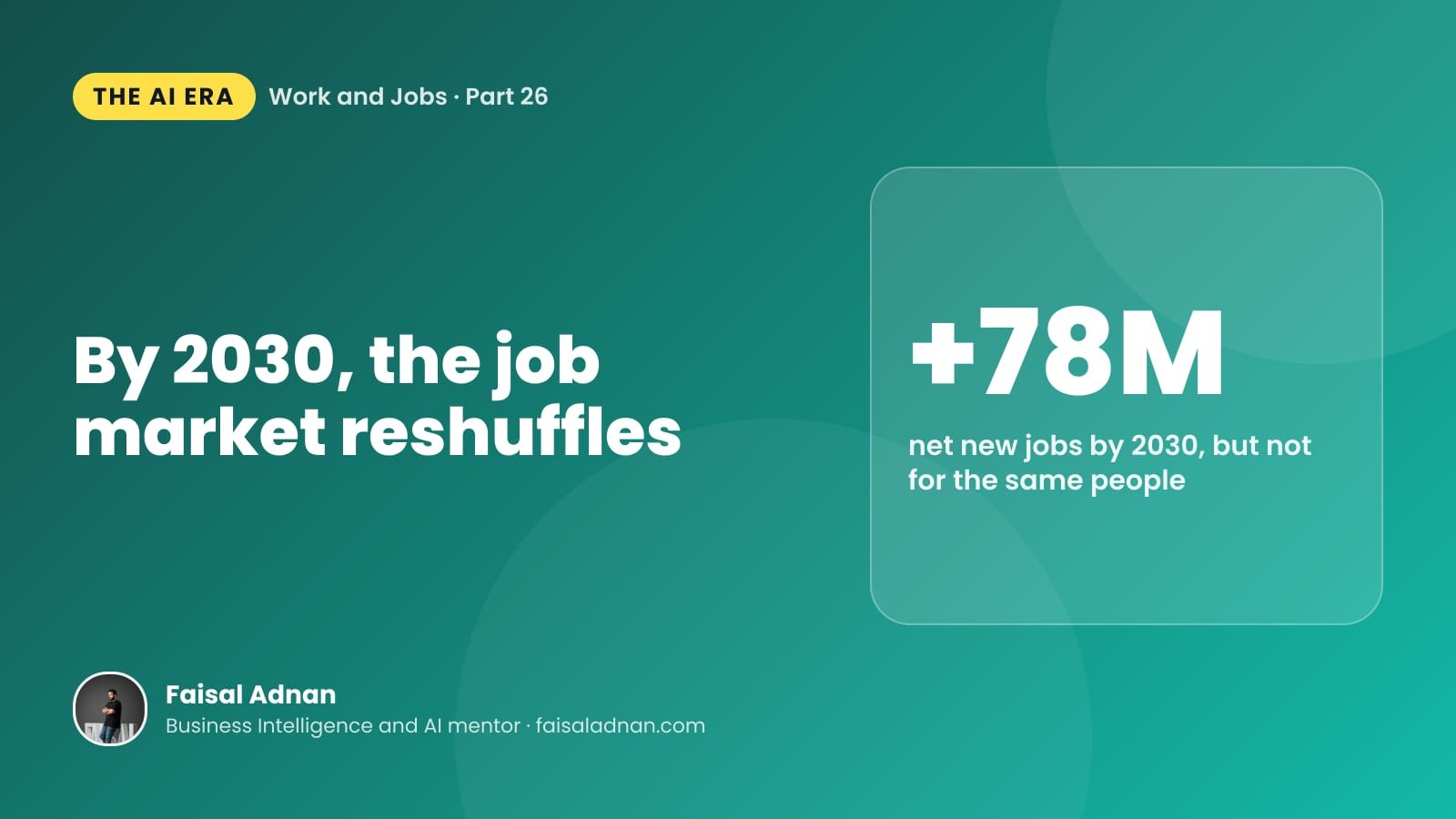
The World Economic Forum's Future of Jobs Report 2025 is one of the most quoted sources on what AI will do to work. It is based on a survey of more than 1,000 employers who together employ about 14 million workers. This post goes through its biggest numbers and explains how to read them without panic or complacency.
Key takeaways
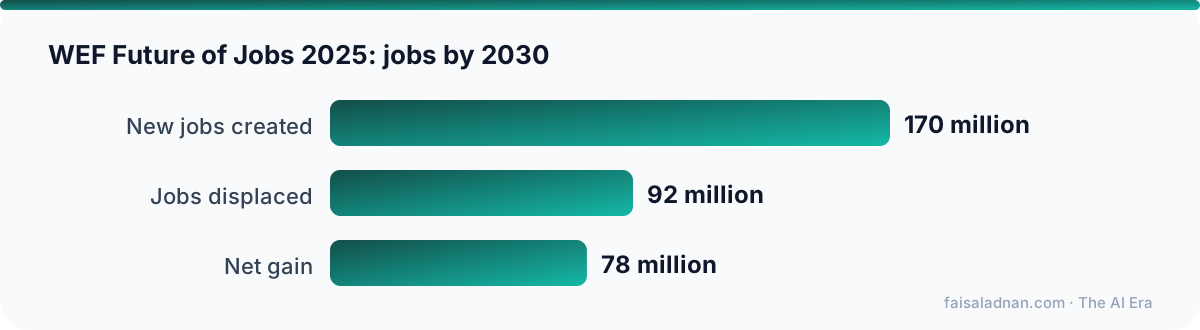
AI Magazine and UNLEASH, which wrote an HR-focused analysis of the report, both summarise these points. The takeaway is that the total can be positive and still feel painful for individuals. A displaced paralegal does not automatically become an AI engineer. Someone has to retrain, relocate or accept a different path, and that costs time and money.
The roles employers expect to grow fastest include big data specialists, AI and machine learning specialists, fintech engineers and software developers. The top rising skills are AI and big data, then networks and cybersecurity, then technological literacy. And analytical thinking is still valued by seven in ten employers, which I find reassuring: the human skills are not going away.
The report asks employers who performs tasks today and who they expect to do so in 2030. In 2025, the shares were 47% humans alone, 22% machines alone and 30% humans and machines together. By 2030, employers expect a near-even three-way split. The fastest-growing slice is humans working with AI.
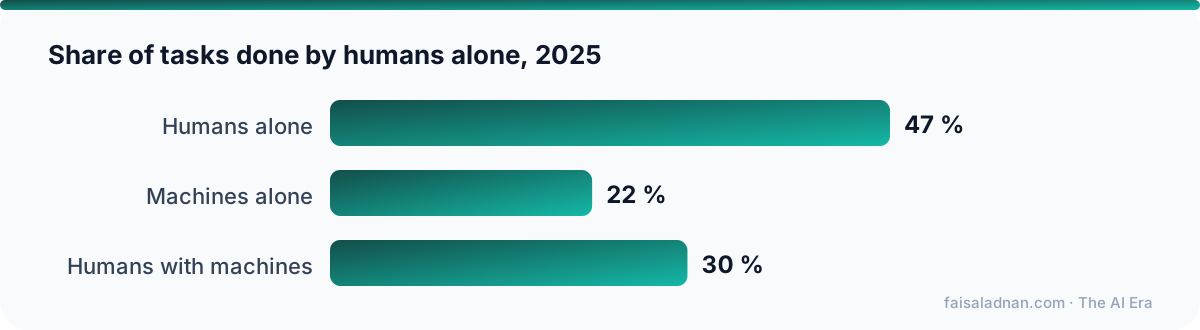
That is why the winning position is not "human versus machine". It is human plus machine.
Garry Kasparov, who lost to Deep Blue in 1997, makes this argument better than most. He describes how teams of humans and machines can beat either one alone.
Forecasts are not destiny. Surveys capture what employers expect today, and expectations change as technology and the economy do. Use the report as a map of directions, not a schedule.
A forecast about 2030 is useful, but what is happening now looks different, especially for people at the start of a career. The next two posts cover the layoff numbers and why the entry-level door is closing first.
See the complete AI Era series

Written by Faisal Adnan
Business Intelligence and AI mentor. I teach Data Analytics, Power BI, Microsoft Fabric, SQL, Python and applied AI, and write about what is changing and what it means for your career.

Written by
Faisal Adnan is a data analytics and AI mentor from Pakistan. He teaches Power BI, Microsoft Fabric, machine learning and applied AI through live classes and 1-on-1 mentorship, and writes in plain language so students and working professionals can follow where AI is heading and what to learn next.
One page that lists every post in The AI Era series, grouped by theme, with a short method for checking any AI claim yourself.
By Faisal Adnan
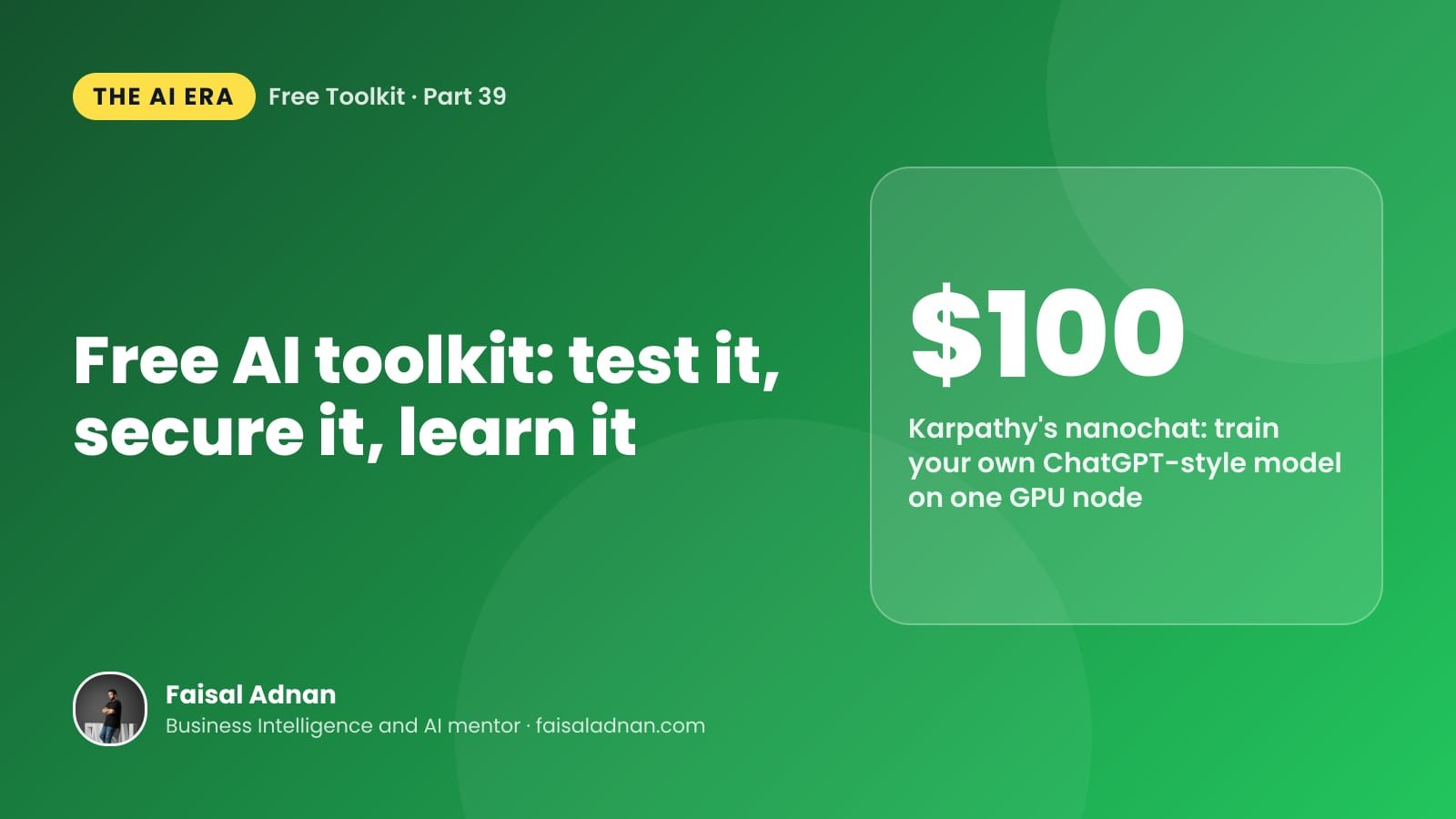
Free tools to test AI apps, scan them for security problems and learn how models are built, including Playwright, promptfoo, garak, PyRIT, Semgrep and Karpathy's nanochat. Plus a starter plan.
By Faisal Adnan
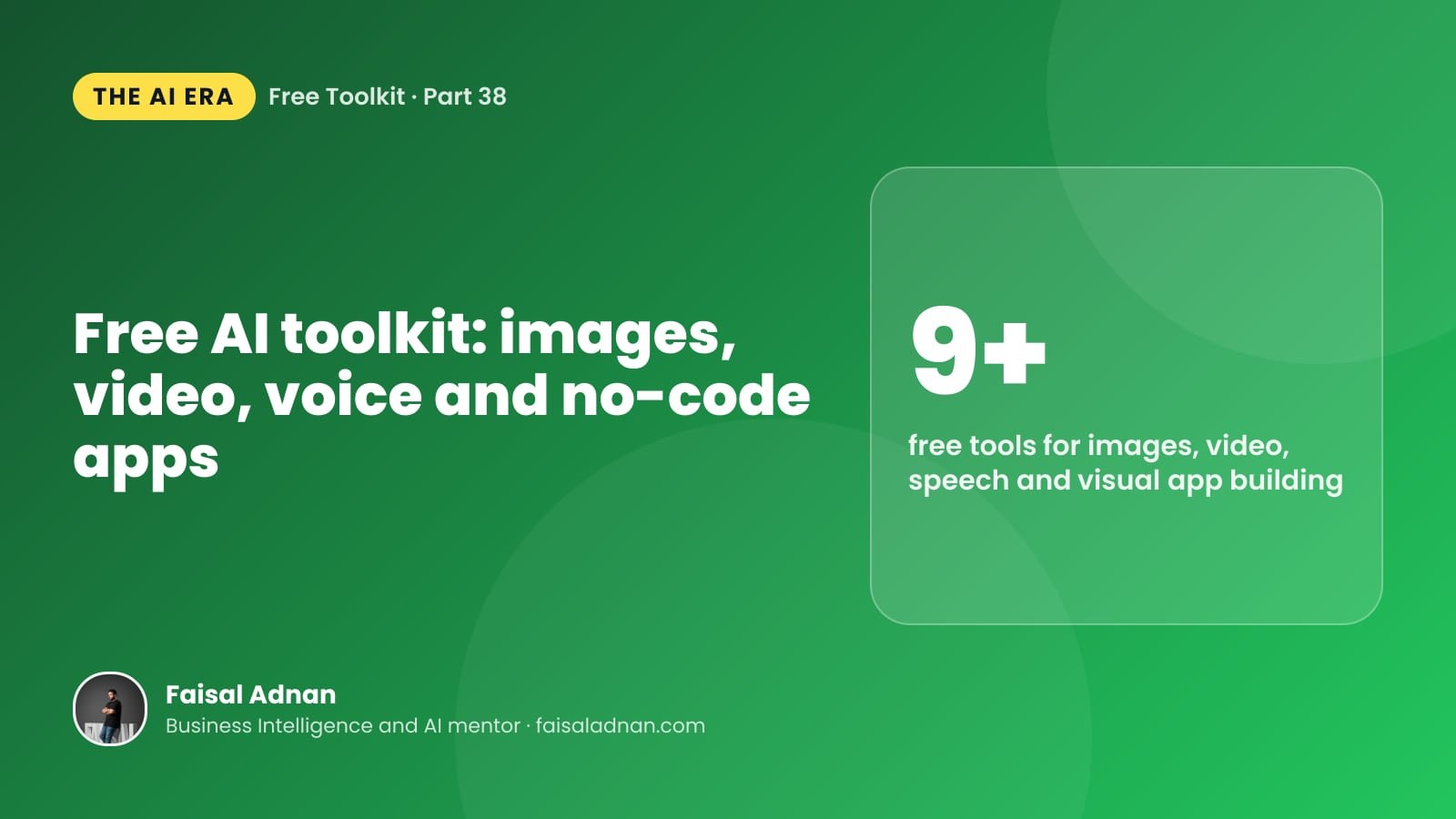
Open-source tools for no-code AI apps, image and video generation and speech, including Urdu transcription with Whisper, plus a licence warning every builder should read.
By Faisal Adnan