AI Basics & History05 Nov 2026
The AI Era: The Complete Series Guide
One page that lists every post in The AI Era series, grouped by theme, with a short method for checking any AI claim yourself.
By Faisal Adnan
Faisal Adnan · 05 Nov 2026
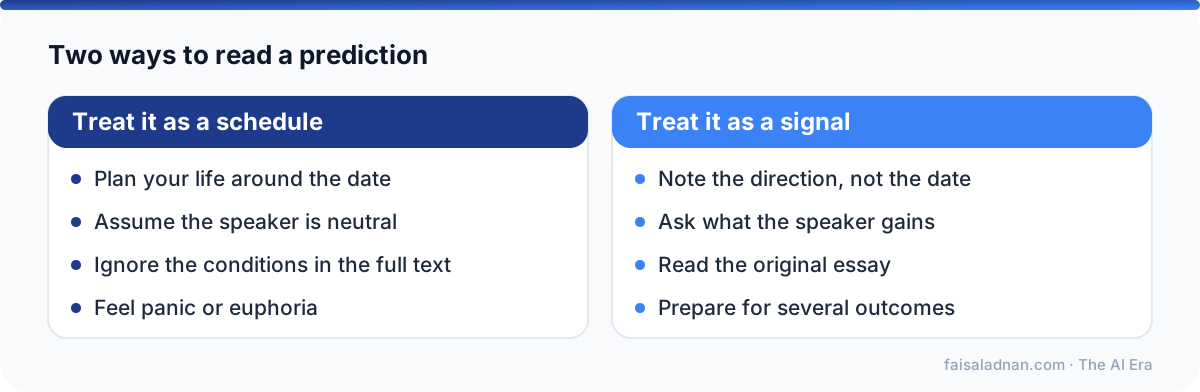
Headlines about AI leaders often turn long essays into one dramatic sentence. This post goes back to what five of them actually said, with the date and the context, and then gives you a method for reading predictions without being carried away or dismissing them.
Key takeaways
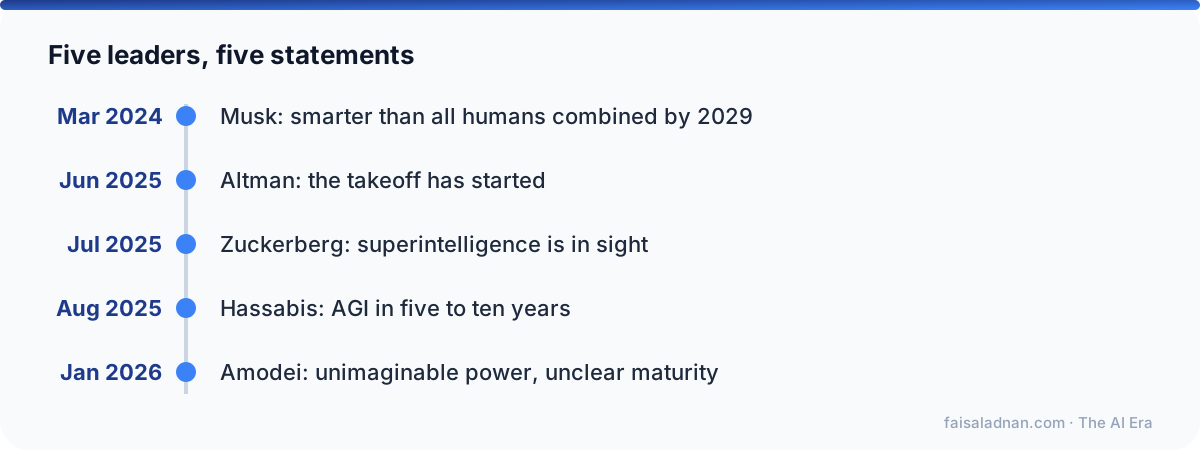
Sam Altman, OpenAI, 10 June 2025, "The Gentle Singularity": "We are past the event horizon; the takeoff has started. Humanity is close to building digital superintelligence." He also writes that so far it is much less weird than it seems like it should be. Robots are not yet walking the streets.
Dario Amodei, Anthropic, January 2026, "The Adolescence of Technology": Humanity is about to be handed almost unimaginable power, and it is deeply unclear whether our social, political and technological systems have the maturity to wield it. In the same essay he repeats his earlier prediction that AI could displace half of all entry-level white-collar jobs in the next one to five years.
Elon Musk, March 2024, reported by Fox Business: AI will probably be smarter than any single human next year, and by 2029 smarter than all humans combined.
Mark Zuckerberg, Meta, 30 July 2025, "Personal Superintelligence": Meta's AI systems are showing glimpses of improving themselves, slowly but undeniably, and developing superintelligence is now in sight.
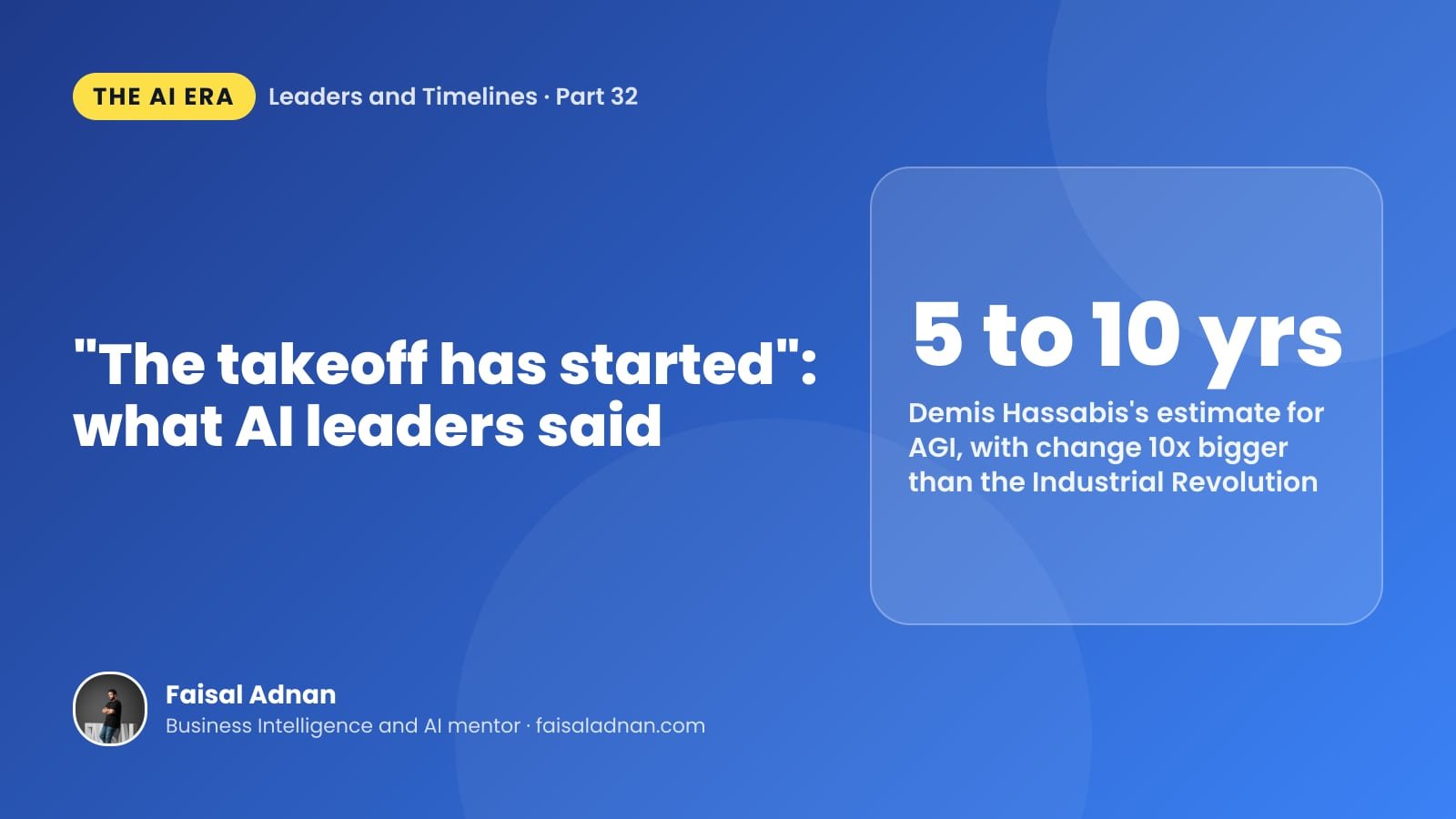
Demis Hassabis, Google DeepMind, August 2025: AGI could arrive within five to ten years and bring change "10 times bigger than the Industrial Revolution, and maybe 10 times faster" (as PC Gamer reported).
The strongest counterweight to this enthusiasm comes from people who also build the technology but are less sure about speed. See Ask Ten Leaders, Get Ten Timelines and The Decade of Agents, Not the Year.
See the complete AI Era series
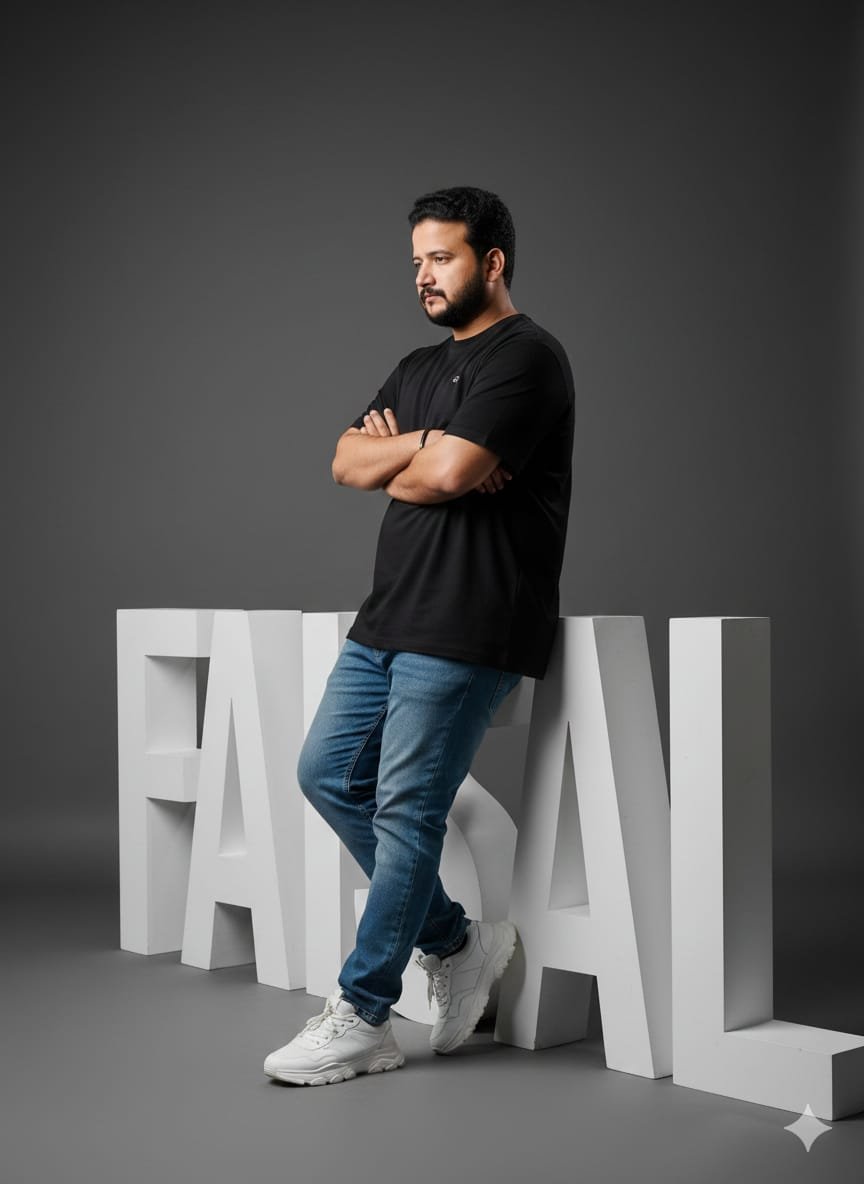
Written by Faisal Adnan
Business Intelligence and AI mentor. I teach Data Analytics, Power BI, Microsoft Fabric, SQL, Python and applied AI, and write about what is changing and what it means for your career.

Written by
Faisal Adnan is a data analytics and AI mentor from Pakistan. He teaches Power BI, Microsoft Fabric, machine learning and applied AI through live classes and 1-on-1 mentorship, and writes in plain language so students and working professionals can follow where AI is heading and what to learn next.
One page that lists every post in The AI Era series, grouped by theme, with a short method for checking any AI claim yourself.
By Faisal Adnan
Free tools to test AI apps, scan them for security problems and learn how models are built, including Playwright, promptfoo, garak, PyRIT, Semgrep and Karpathy's nanochat. Plus a starter plan.
By Faisal Adnan
Open-source tools for no-code AI apps, image and video generation and speech, including Urdu transcription with Whisper, plus a licence warning every builder should read.
By Faisal Adnan