AI Basics & History05 Nov 2026
The AI Era: The Complete Series Guide
One page that lists every post in The AI Era series, grouped by theme, with a short method for checking any AI claim yourself.
By Faisal Adnan
Faisal Adnan · 05 Nov 2026
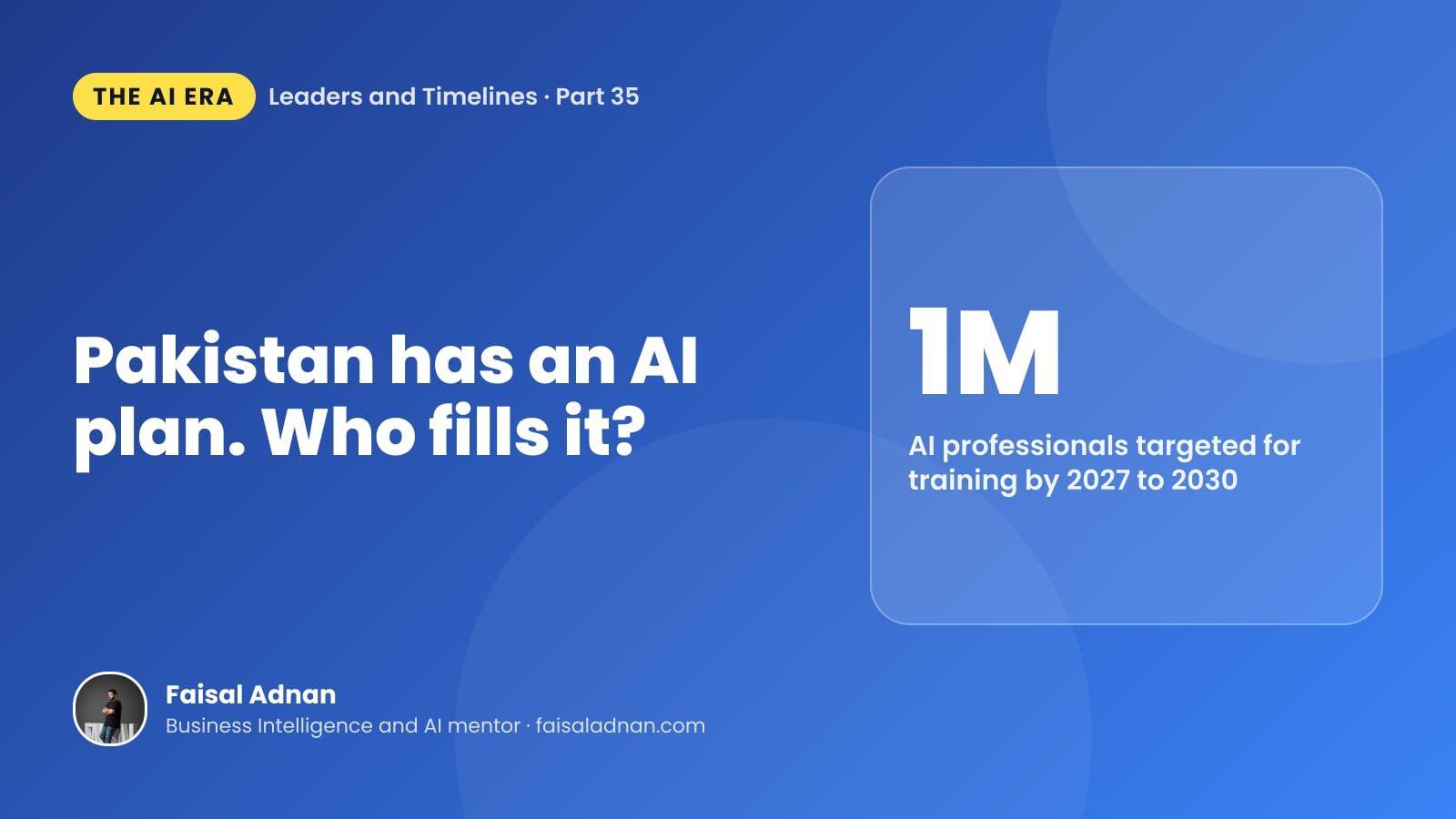
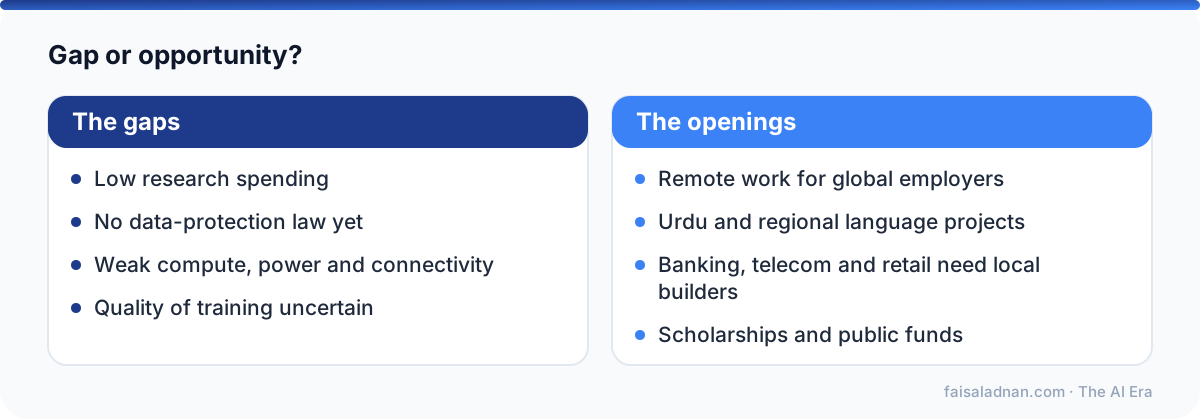
Pakistan now has a national AI policy. Policies on paper do not train anyone by themselves. People do. This post looks at what the policy promises, where the gaps are and what you can do this year to be one of the people who fills it.
Key takeaways
Prime Minister Shehbaz Sharif's cabinet approved the National Artificial Intelligence Policy 2025, ProPakistani reported in July 2025. The targets listed:
The Pakistan Institute of Development Economics (PIDE) published a policy brief in November 2025 assessing whether AI can transform Pakistan. Its concerns:
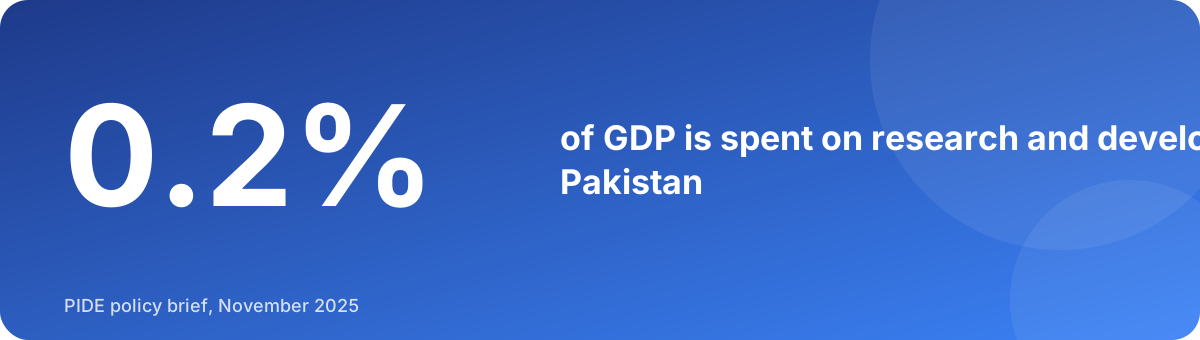
I read these as a warning, not an excuse. Targets of one million professionals mean little if training programmes lack quality, and models need data governance to be trusted. A learner who completes a certificate but cannot build or explain anything will not find work, however large the target.
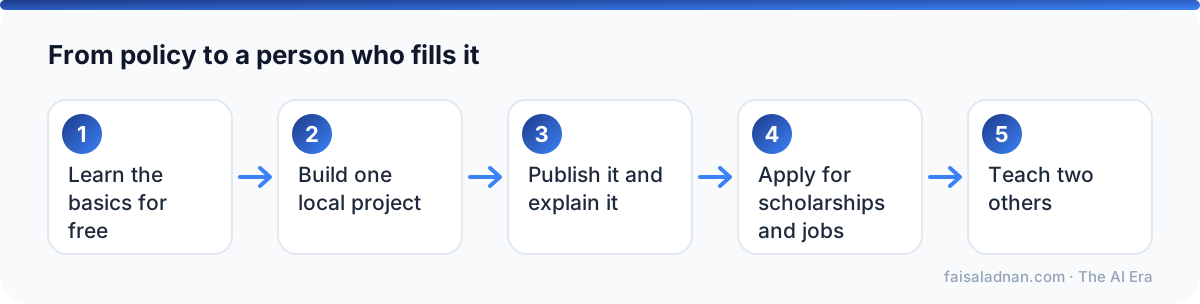
The question in the title has a simple answer: the plan is filled by people who start, finish and show their work. A target of a million is only a number. Each of those one million is one person who decided to learn. For the wider employment picture, read By 2030 the Job Market Reshuffles.
See the complete AI Era series
Written by Faisal Adnan
Business Intelligence and AI mentor. I teach Data Analytics, Power BI, Microsoft Fabric, SQL, Python and applied AI, and write about what is changing and what it means for your career.

Written by
Faisal Adnan is a data analytics and AI mentor from Pakistan. He teaches Power BI, Microsoft Fabric, machine learning and applied AI through live classes and 1-on-1 mentorship, and writes in plain language so students and working professionals can follow where AI is heading and what to learn next.
One page that lists every post in The AI Era series, grouped by theme, with a short method for checking any AI claim yourself.
By Faisal Adnan
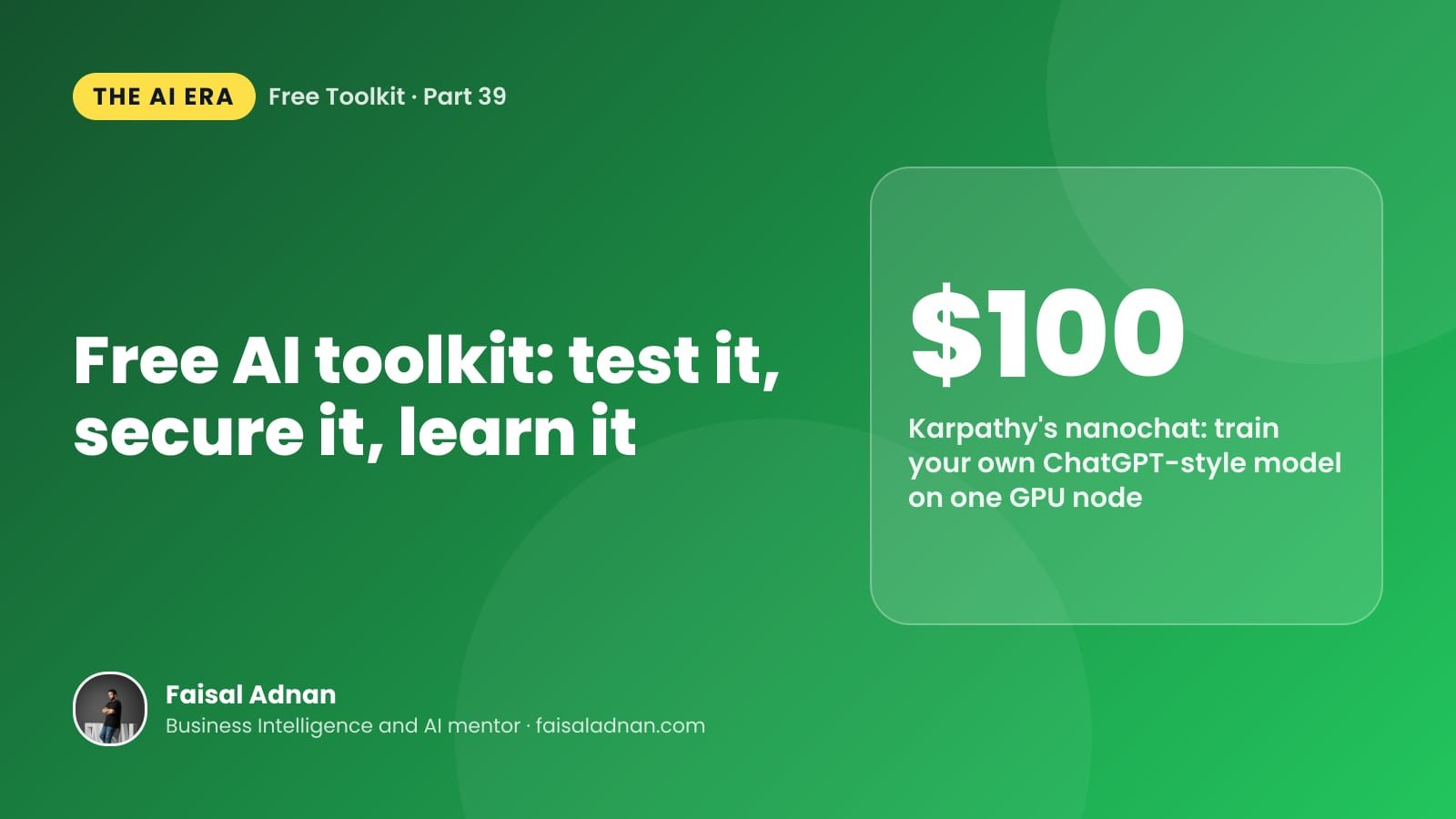
Free tools to test AI apps, scan them for security problems and learn how models are built, including Playwright, promptfoo, garak, PyRIT, Semgrep and Karpathy's nanochat. Plus a starter plan.
By Faisal Adnan
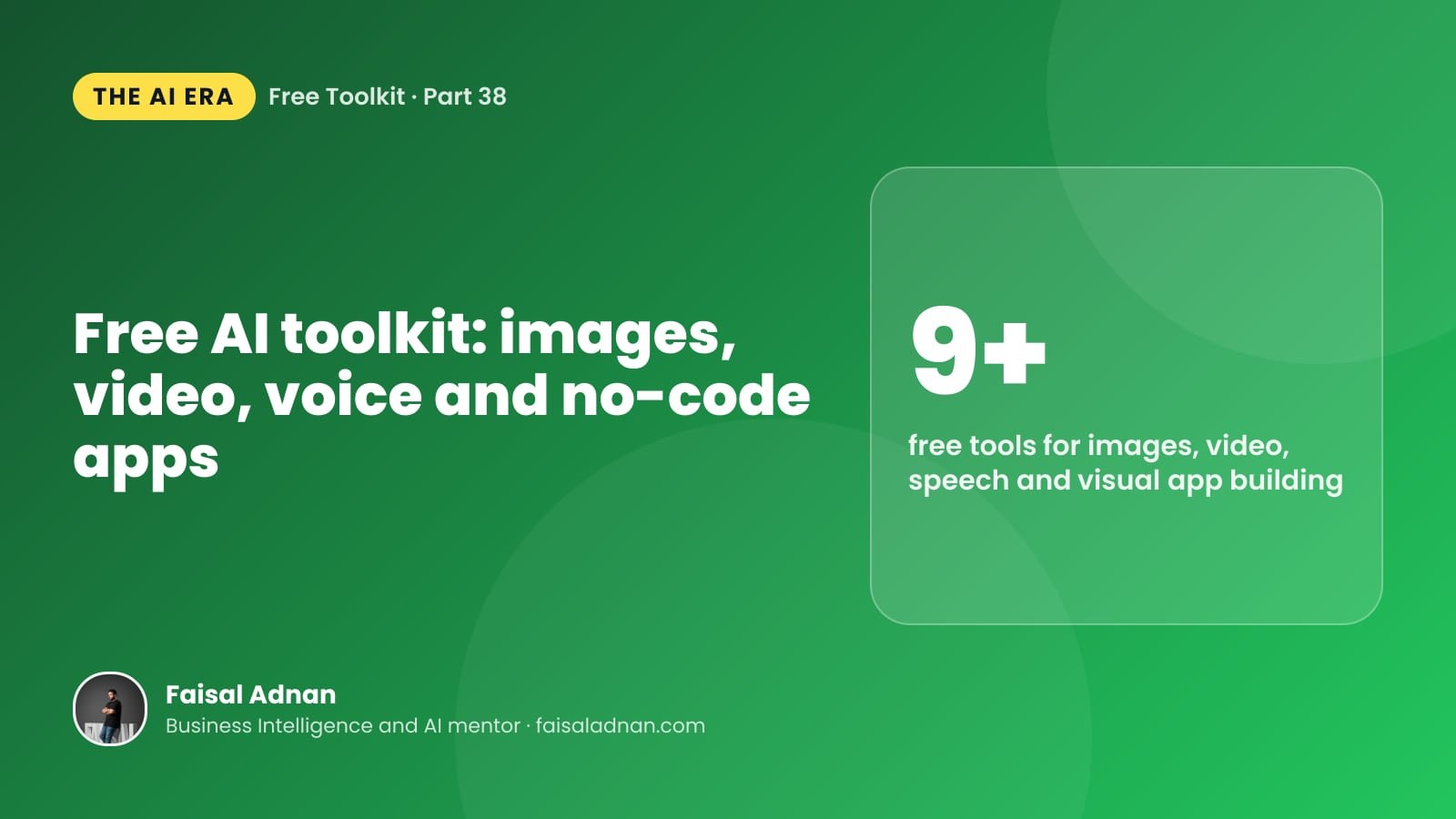
Open-source tools for no-code AI apps, image and video generation and speech, including Urdu transcription with Whisper, plus a licence warning every builder should read.
By Faisal Adnan